
If jaw clicking, morning headaches, or facial soreness have become part of your daily routine, your bite might be the hidden culprit. Many neighbors are surprised to learn that orthodontic care can play a meaningful role in easing TMJ discomfort. At LaFerla Wilson Orthodontics, Dr. LaFerla and Dr. Wilson, two board-certified orthodontists, help patients understand how bite alignment connects to jaw function and when orthodontics help TMJ symptoms improve.
Let’s walk through what TMJ really means, how treatment works, and whether you might be a good candidate for care that targets the source rather than the symptoms.

What Is TMJ and How Does Your Bite Connect to Jaw Pain?
TMJ refers to the temporomandibular joint, the hinge connecting your lower jaw to your skull just in front of each ear. When this joint, the surrounding muscles, or the disc inside becomes irritated, the condition is called TMD (temporomandibular disorder). Most people simply call it “TMJ.” It’s a small joint that does big work every time you talk, chew, or yawn.
Common symptoms include:
- Jaw clicking or popping when you open your mouth
- Tension headaches, especially in the morning
- Ear discomfort or a feeling of fullness without infection
- Facial soreness along the cheeks or temples
- Limited jaw opening or a locked feeling
Here’s where your bite comes in. When teeth don’t meet properly, called malocclusion, your jaw muscles work overtime to compensate. That constant strain stresses the joint and can lead to inflammation over time. Bite alignment is one piece of the puzzle, though. Stress, teeth grinding (bruxism), and past injuries also contribute. That’s why a careful evaluation at LaFerla Wilson Orthodontics starts with identifying the real source of your discomfort before any treatment begins.
How Orthodontic Treatment Addresses TMJ Pain
Orthodontic care addresses TMJ by correcting the underlying bite issues that force your jaw muscles and joint to overwork. When teeth come together properly, pressure spreads evenly across the jaw, muscles relax, and the joint moves more freely. Here’s how the process typically unfolds at LaFerla Wilson Orthodontics.
- Complete bite analysis and digital imaging. Dr. LaFerla and Dr. Wilson use digital scans, digital photos, and digital X-rays to map how your teeth and jaw interact.
- Diagnosis of the specific malocclusion. Whether it’s an overbite, crossbite, open bite, or deep bite, pinpointing the issue guides every decision that follows.
- Custom treatment plan. Depending on your situation, your plan may involve metal braces, clear braces, or clear aligners like Angel Aligners and Invisalign.
- Gradual bite correction. As teeth shift into their ideal positions, jaw forces redistribute. Muscles stop compensating. The joint settles into a healthier pattern.
- Retention phase. Once your bite is corrected, retainers hold everything in place. Our smart smile and smart smile plus programs make long-term retention simple.
Many patients notice meaningful relief within three to twelve months of starting treatment, though timelines vary based on severity. Progress is steady, not sudden. Each visit builds on the last, and small improvements add up over the course of care.
Benefits of Orthodontic TMJ Treatment
Choosing orthodontics for bite-related TMJ offers advantages that go beyond symptom relief. You’re addressing the cause, not just quieting the signals your body is sending. Here’s what many of our neighbors experience when their bite finally works the way it should.
How Does Orthodontic Care Target the Root Cause?
- Addresses the root cause. Night guards and medications can quiet symptoms, but they don’t move teeth. Orthodontic treatment targets the underlying misalignment driving the strain.
- Reduces jaw muscle tension and headaches. When your bite stops forcing muscles to compensate, those tight, overworked tissues finally get to rest. Morning headaches often fade as a result.
- Improves chewing function. A balanced bite spreads force evenly across all your teeth. Chewing becomes easier, and you’ll likely notice less fatigue after meals.
- Reduces uneven tooth wear. Misaligned teeth grind against each other in ways nature never intended. Correcting the bite protects your enamel for the long haul.
What Lasting Improvements Can You Expect?
- Long-term relief instead of short-term management. Splints and bite guards serve a purpose, but they often require ongoing use. Orthodontic correction can offer more lasting results.
- Better sleep and less grinding. Patients frequently report improved sleep quality and reduced bruxism once their bite is balanced.
- A brighter smile as a bonus. Straight, well-aligned teeth are the natural byproduct of bite correction. You get real treatment, real results, and a confident smile along the way.
For many families, that combination of comfort and confidence is exactly why they choose orthodontic care over symptom-only approaches.
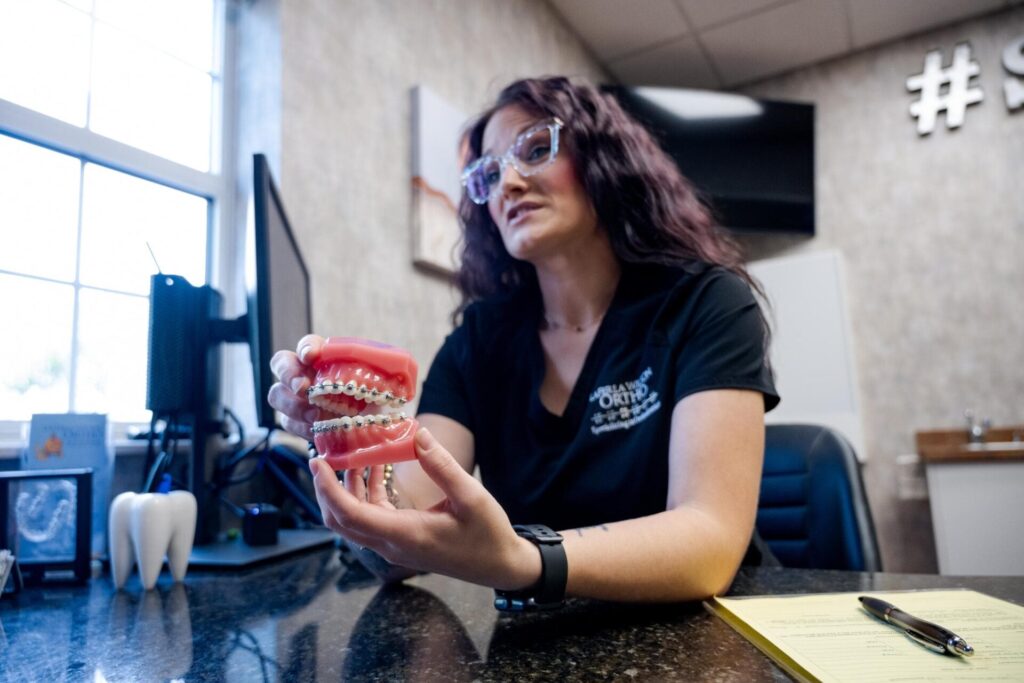
Braces vs. Invisalign vs. Splints vs. Surgical Options for TMJ
Different TMJ situations call for different tools. Here’s how the main options compare so you can have an informed conversation at your free consultation.
| Treatment Option | Best For | Typical Timeline | Role in TMJ Care |
|---|---|---|---|
| Metal or Clear Braces (Damon braces) | Complex bite correction, significant malocclusion | 12-24 months | Corrects the underlying cause |
| Clear Aligners (Angel Aligners and Invisalign) | Mild to moderate bite issues | 6-18 months | Discreet correction of alignment |
| Splint or Night Guard Therapy | Grinding, short-term symptom relief | Ongoing use | Manages symptoms, doesn’t correct bite |
| Joint Intervention | Structural joint damage, severe cases | Varies | Last resort after conservative options |
Metal and clear braces give Dr. LaFerla and Dr. Wilson precise control for complex cases. Clear aligners offer a hidden treatment, visible results approach for patients who want something less noticeable. Splints are useful for protecting teeth from nighttime grinding, but they don’t move teeth into better positions. Joint intervention is reserved for situations where the joint itself has structural damage that non-surgical care can’t address.
In many cases, a combination approach works best. A patient might wear a night guard during initial treatment, then transition into clear aligners once inflammation calms. Your custom treatment plan will reflect what makes sense for your situation.
Are You a Candidate for Orthodontic TMJ Treatment?
Not every case of jaw discomfort responds to orthodontics, and that’s an important conversation to have upfront. Here’s a self-assessment checklist to consider before booking a visit.
You may be a strong candidate if:
- Your bite misalignment has been identified as a primary contributor to your TMJ symptoms
- Conservative treatments (night guards, physical therapy, stress management) haven’t given you lasting relief
- Your overall oral and gum health is in good shape
- You have realistic expectations about timeline and gradual improvement
- You’re committed to wearing retainers after treatment to maintain results
Orthodontics alone may not be the full answer if:
- Your TMJ stems primarily from stress, trauma, or arthritis in the joint
- You have significant structural damage to the joint itself
- Your symptoms haven’t been evaluated by a qualified provider yet
Dr. LaFerla and Dr. Wilson, both board-certified orthodontists, will give you a straightforward assessment at your consultation. If orthodontics is the right path, we’ll explain exactly why. If another approach would serve you better, we’ll point you in that direction. Honest guidance is part of putting patients first, every single time.

Frequently Asked Questions About Orthodontics and TMJ
Can braces cure TMJ permanently?
Braces can offer lasting relief when bite misalignment is the primary cause of TMJ symptoms. By correcting how your teeth come together, braces reduce the strain on your jaw joint and muscles. However, TMJ has multiple potential causes, so results depend on your specific situation. A thorough evaluation at LaFerla Wilson Orthodontics helps determine whether orthodontic care can address the root issue.
Will Invisalign help or worsen my jaw pain?
Clear aligners like Invisalign can help TMJ symptoms when they’re used to correct a malocclusion contributing to your discomfort. Some patients also notice temporary relief because aligners act as a thin barrier that reduces grinding. If your TMJ is driven by factors unrelated to bite alignment, aligners may not provide the improvement you’re hoping for. Your consultation will clarify whether this option fits your needs.
How long before I feel TMJ relief with orthodontic treatment?
Many patients begin noticing improvements within three to twelve months of starting treatment, though timelines vary. Relief tends to be gradual as your bite shifts into a healthier position and your muscles adapt. Some symptoms, like clicking, may ease earlier than others, like chronic tension headaches. Consistent progress is the goal, and your orthodontist will track improvements at each visit.
Can TMJ come back after braces?
TMJ symptoms can return if teeth shift out of alignment after treatment ends, which is why retainers are so important. Our smart smile and smart smile plus programs help you maintain your corrected bite long-term. Lifestyle factors like stress and grinding can also trigger symptoms independent of your bite. Staying consistent with retainer wear gives you the best shot at lasting results.
Should I see an orthodontist or TMJ specialist first?
If you suspect your bite plays a role in your symptoms, starting with a board-certified orthodontist is a smart first step. Dr. LaFerla and Dr. Wilson can evaluate your alignment and identify whether orthodontic care would address the underlying cause. If your TMJ appears to stem from joint damage or other factors, they’ll refer you to the appropriate specialist. A free consultation is a low-pressure way to get clarity.
At what age should bite-related TMJ be addressed?
The American Association of Orthodontists recommends an initial orthodontic evaluation by age seven, when early bite issues can be spotted. For teens and adults, there’s no upper age limit for addressing bite-related TMJ. Treatment works at any age as long as your teeth and gums are healthy. The sooner a misaligned bite is identified, the more options you typically have.
If jaw discomfort has been wearing you down, understanding your options is the first step toward feeling better. Learning how your bite connects to the way your muscles and joint behave can shift the whole picture, and small changes often lead to meaningful improvements over time. When you’re ready to explore whether orthodontic care could help, a conversation with Dr. LaFerla and Dr. Wilson is a thoughtful place to begin. Bright futures start with big smiles, and understanding your bite is one more step toward both.